

Septum
- Home
- /
- Septum
Septum
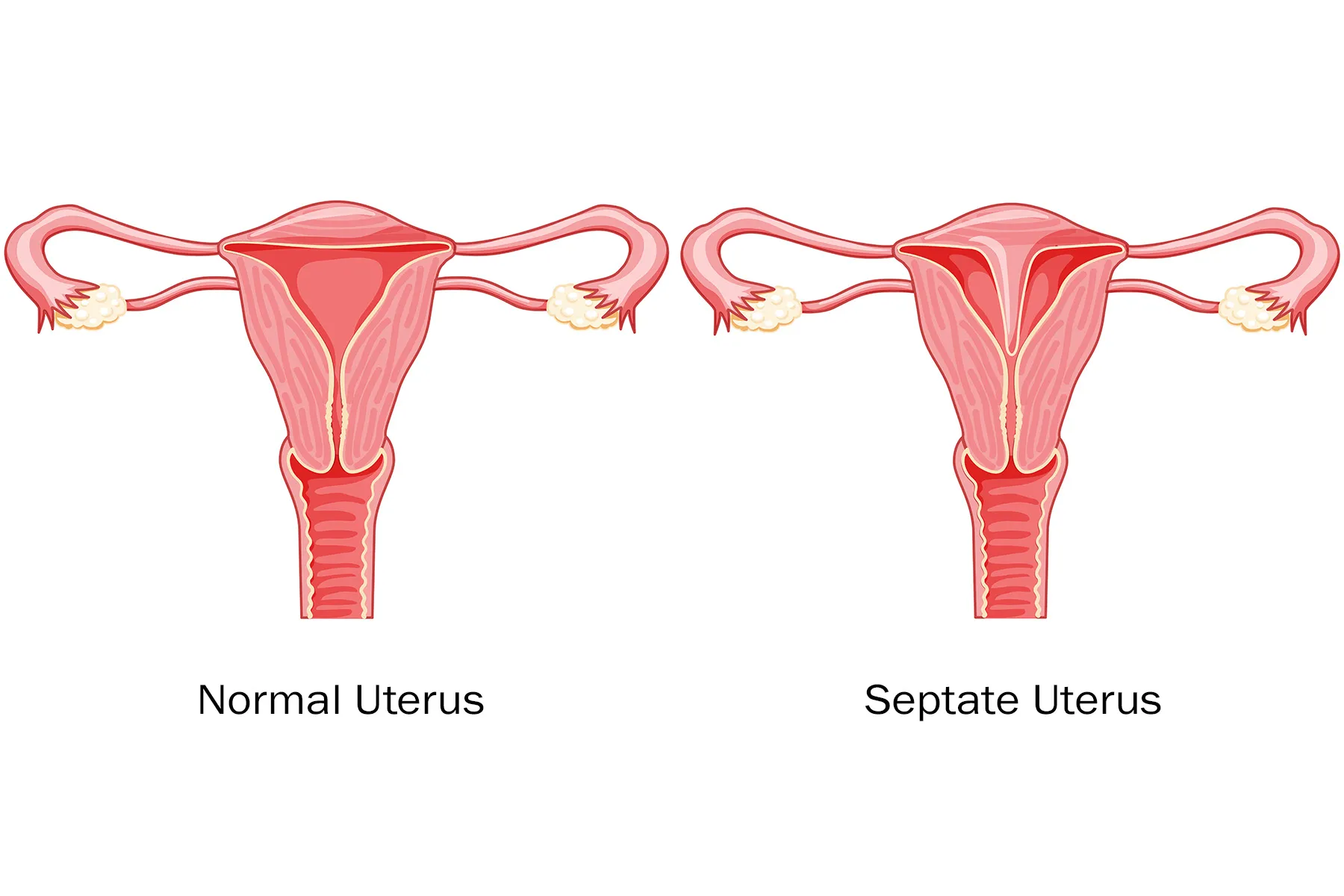
A uterine septum is a congenital malformation (present from birth) where a band of tissue divides the uterine cavity partially or completely. It is the most common type of Müllerian anomaly and can significantly impact fertility, increasing the risk of miscarriage and complications during pregnancy.
This condition occurs when the two halves of the uterus fail to fully fuse during fetal development, leaving a fibrous or muscular partition in the center of the uterus.
Types of Uterine Septum
Partial Septum (Incomplete): The septum does not reach the cervix
Complete Septum: The septum extends from the top of the uterus (fundus) to the cervix or even vagina
Associated Vaginal Septum (in some cases): Vertical tissue in the vaginal canal
Symptoms of Uterine Septum
Recurrent miscarriages (especially in the first trimester)
Infertility
Painful periods or cramping
Premature labor or abnormal fetal positions
Repeated implantation failure during IVF
Early pregnancy loss
Diagnosis
Diagnosis typically involves imaging techniques that allow a clear view of the uterus:
3D Transvaginal Ultrasound – Non-invasive and accurate
MRI – Detailed imaging for complex anomalies
Hysterosalpingography (HSG) – X-ray of the uterus and fallopian tubes
Hysteroscopy & Laparoscopy – Gold standard to confirm and correct the defect simultaneously
Treatment – Hysteroscopic Septum Resection
Performed under general or spinal anesthesia
A thin hysteroscope is inserted through the cervix
The septum is carefully cut using scissors, electrosurgical tools, or lasers
No abdominal incisions required
Typically completed as a day-care procedure
Minimal recovery time and excellent success rates
Hormonal treatment may be prescribed post-surgery to promote healing of the uterine lining.
Fertility and Pregnancy Outcomes
Surgical correction dramatically improves fertility outcomes
Reduces miscarriage rates
Increases chances of full-term pregnancy
Post-surgery conception may occur naturally or with assisted reproductive techniques
Why Choose Dr. Kalpana Tiwari for Uterine Septum Correction?
Dr. Kalpana Tiwari is a leading gynecological endoscopic and fertility surgeon with over 15 years of experience in:
Hysteroscopic correction of uterine anomalies
Advanced diagnostic evaluation for recurrent pregnancy loss
Precision-based, uterus-conserving surgeries
Compassionate care and personalized fertility planning
