

Fibroid
- Home
- /
- Fibroid
Fibroid
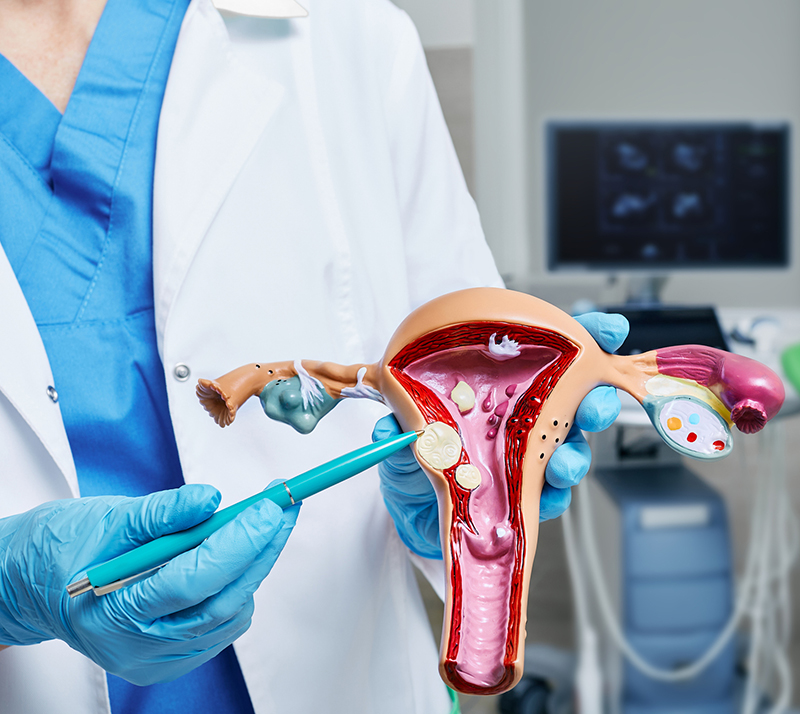
Uterine fibroids, also known as leiomyomas or myomas, are non-cancerous growths that develop in or around the uterus. They are one of the most common gynecological conditions affecting women of reproductive age. While some fibroids remain small and asymptomatic, others can grow large and cause significant discomfort or fertility issues.
Fibroids can vary in size, number, and location—ranging from tiny nodules to large masses that distort the shape of the uterus.
Types of Fibroids
Intramural Fibroids – Grow within the uterine wall (most common type)
Submucosal Fibroids – Project into the uterine cavity, often affecting menstrual bleeding and fertility
Subserosal Fibroids – Grow on the outer wall of the uterus and may press on surrounding organs
Pedunculated Fibroids – Attached to the uterus by a stalk; may be inside or outside the uterus
Symptoms of Fibroids
Heavy or prolonged menstrual bleeding
Pelvic pain or pressure
Frequent urination
Constipation
Pain during intercourse
Lower back pain
Difficulty conceiving or infertility
Recurrent miscarriages (in some cases)
Causes and Risk Factors
Hormonal imbalance (especially estrogen and progesterone)
Genetic predisposition
Obesity or high body fat percentage
Early onset of menstruation
Family history of fibroids
Vitamin D deficiency
Lifestyle and dietary factors
Diagnosis
Pelvic ultrasound – First-line imaging to detect and measure fibroids
Transvaginal ultrasound – Provides a closer view of the uterus
MRI scan – For complex cases or surgical planning
Hysteroscopy or Sonohysterography – To assess submucosal fibroids and uterine cavity
Treatment Options for Fibroids
Hormonal medications (GnRH analogs, birth control pills)
NSAIDs for pain relief
Tranexamic acid for heavy bleeding
Note: Medicines manage symptoms but do not eliminate fibroids permanently.
Laparoscopic Myomectomy – Removes fibroids while preserving the uterus
Robotic Myomectomy – Precision-based removal with quicker recovery
Hysteroscopic Myomectomy – Ideal for submucosal fibroids inside the uterine cavity
Uterine Artery Embolization (UAE) – Cuts blood supply to fibroids, causing them to shrink
Endometrial Ablation – Treats bleeding, not suitable for those wanting future pregnancy
Why Choose Dr. Kalpana Tiwari for Fibroid Management?
With more than 15 years of expertise in advanced gynecologic endoscopy and robotic surgery, Dr. Kalpana Tiwari specializes in:
Uterus-conserving surgeries (Myomectomy)
Minimally invasive and robotic techniques for faster recovery
Personalized treatment plans based on fertility needs and lifestyle
Comprehensive care from diagnosis to follow-up
